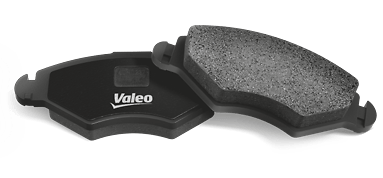
Brake Pad Sets for LCVs
Brake pads are the most sensitive friction part in a braking system, between all the constraints from the brake discs and the piston of the calliper. Focusing on quality and innovation, Valeo provides 98% of the European car range with its knowledge as a premium supplier in the automotive industry, with solutions dedicated to the aftermarket. When a car brakes, the most important safety element in a braking system is smaller than the surface of a hand:
- On this surface, the kinetic energy is transformed in heat and slows down and stops the vehicle.
- On this surface, all physical features have to be mastered to ensure the vehicle handling
- On this surface, all the vibrations have to be absorbed to avoid noise.
For its brake pads range, Valeo utilised the best possible technologies to offer in some cases even more than the O.E. products and to give shorter braking distance, better resistance to fading, and optimal braking under all circumstances.
- O.E. specifications Back to basics: a product designed for a vehicle must ensure the maximum effectiveness.
For optimised fitting and braking effectiveness
- 100% pre-bedded pads All of the Valeo premium pads are pre-bedded on the production line to limit the fading effect. This ensures complete braking effectiveness from the very first braking.
- Packaging Thanks to its brand new packaging, the integrity of pads is protected until the mounting. Modern, practical and compact, it makes life easier for the professional and ensures optimised part identification thanks to its larger label.
- High level of accessories All in one box. Valeo Brake pads are easier to fit, and avoid the need to order additional specific parts
- The best of technologies Pads developed for the O.E. market are specific to one vehicle. In the aftermarket, one friction material covers many different car applications.
As a premium aftermarket specialist, Valeo provides through its innovative braking range highly qualitative technologies to improve safety and comfort for each application.
Get the Latest: Subscribe to Our Newsletter
By signing up your email address above, you agree to receive electronically our commercial offers. You can unsubscribe at any time by changing the settings on your account and through unsubscribe links.
We use reCAPTCHA to prevent automated abuse of our forms. Your use of this form is subject to Google's Privacy Policy and Terms of Service.